
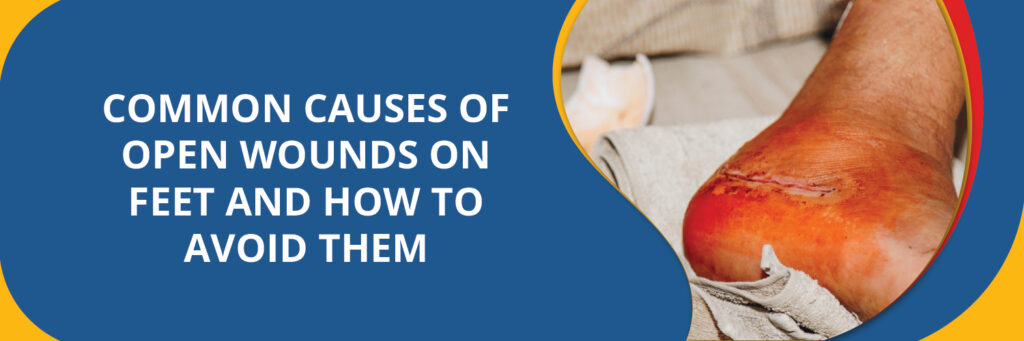
Our feet may be the last thing we think of in terms of care and protection as we take step after step in our everyday lives. An open wound on your foot is more than a simple annoyance; if left untreated, it can lead to infections, chronic pain, and loss of mobility. No matter if you’re an athlete, have a busy lifestyle, or manage another condition that affects the feet, this article will explore common foot wounds and tips to avoid them.
Friction and Blisters from Tight or Poorly Fitted Shoes
Often, one of the most common reasons for open wounds on your feet is friction from shoes that don’t fit your feet properly. When shoes continuously rub against the skin, particularly during walking or running, blisters form as small pockets of fluid. If the blisters were to burst, they could become open sores. Tight shoes, rough seams, and a lack of breathability all increase the risk of developing an open wound. To prevent friction wounds, you should always wear properly fitted shoes with cushioned insoles and moisture-wicking socks, especially for whatever activity you are doing. It can also help to break in new shoes gradually, to reduce the potential for skin irritation and blister formation.
Cuts and Scrapes from Walking Barefoot
When you walk without shoes, particularly outdoors or in public areas, you run the risk of injury from sharp items, such as stones, glass, or metal. Your feet can also be exposed to injuries from small debris or rough flooring while sitting at home. A cut or abrasion to a small area of your foot can easily become infected if it is not cleaned completely, because your feet can harbor bacteria and sweat. To prevent a foot injury, you should always have some type of footwear, even at home. Footwear like sandals, slippers, or water shoes can offer the feet protection from injury. It is also always a good habit to look around before walking barefoot. You may avoid needless foot injuries this way.
Diabetic Foot Ulcers and Poor Circulation
Individuals with diabetes are especially vulnerable to open wounds of the foot called ulcers. High blood sugar levels can damage nerves (neuropathy) and decrease blood circulation, which makes it harder for the body to heal even minor injuries. The individual may not even feel pain from the cut or blister, so they don’t know the damage has occurred until it becomes a serious wound or infection. The prevention of diabetic foot ulcers is accomplished through inspecting the feet every day, controlling glucose, and wearing shoes made for diabetes prevention (and reducing pressure points). It is important to visit and see a podiatrist regularly for checks on the feet and any associated wounds or problems to prevent them from developing into ugly or serious wounds.
Insect Bites and Allergic Reactions
Sometimes, people can even be allergic to the saliva of the insect or other irritants in the environment that can make the skin much more sensitive, causing potential sores. To decrease your chances of an insect bite becoming a wound, always wear insect repellent when outside, especially outdoors in grassy or wooded areas. Always cover your feet as well, and if you do get bitten, avoid scratching the bite area, and consider applying topical soothing creams and/or antihistamines to help with any irritation. If you can treat the bites sooner rather than later, you will be able to avoid any open wounds.
Fungal Infections and Athlete’s Foot
Fungal infections can also weaken skin and lead to cracks and eventually open wounds. Some types of fungal infections, particularly athlete’s foot, thrive in a warm, moist environment, such as sweaty shoes, locker rooms, and public showers. Once infected, areas of skin will become dry, scaly, and itchy, with very little relief other than scratching, which is sometimes worse for your skin. Again, keep your feet clean and dry, change your socks frequently, and wear breathable shoes to limit your chance of a fungal wound. Use antifungal powders or sprays if you tend to have more infections, and please do not share shoes and towels.
The End
Foot wounds can be tiny, but if they’re not properly cared for and something is not done promptly, they can become very painful and extremely dangerous. While there are numerous reasons, most wounds, if you care for your feet regularly, can be avoided. Foot care is not just about comfort, but also about maintaining the ability to walk and engage in daily activities. When you recognize these common causes and avoid them, you will have healthy, strong, and ready feet wherever life may take you.