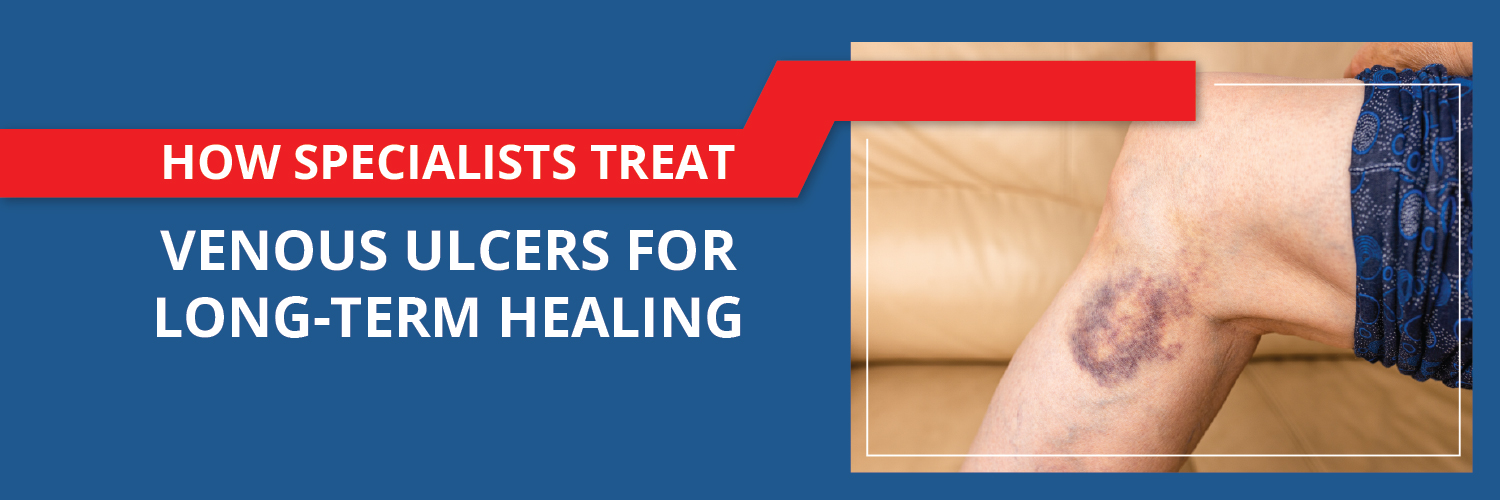
Venous ulcers are one of the more common chronic wounds that affect a person. Without the proper care and treatment that a specialist can provide, these can recur and also cause other health complications.
Long-term healing requires medical treatment, lifestyle changes, and patient assistance. At R3 Wound Care, we take into consideration all aspects of a patient to provide a comprehensive and tailored treatment plan.
What Are Venous Ulcers?
Venous ulcers are open sores that occur on the leg, mainly the lower part around the ankles. The primary cause of venous ulcers is poor blood circulation.
Faulty valves in the veins (venous insufficiency) cause the pooling of blood, which increases the pressure in the surrounding area and damages the skin.
The most common symptoms of venous ulcers are swelling and aching in the general area, which may also be accompanied by itchy skin or cracked skin.
The wound is shallow in most cases, but it will seep with clear or yellowish fluid, which can cause hygiene issues. It needs quick and effective intervention to prevent it from leading to serious complications, which include severe infections and chronic pain.
Initial Diagnosis and Assessment
A precise diagnosis of the venous ulcer is the first and most vital step to building an effective treatment strategy for the patient.
We start with a physical examination of the patient and a detailed analysis of their medical history. With new non-invasive technologies like ankle-brachial index (ABI) tests, we are able to gather the required data with minimal discomfort to the patient.
The wound is measured for depth and size, analyzed for severity of infection, and other important factors that help determine the right type of treatment.
Treatment Strategies at R3 Wound Care
● Wound Cleaning and Debridement
With venous ulcers, the wounds first need to be cleaned and then debrided. In cases such as this, there will be a necrotic (dead) tissue surrounding the wound. Debridement is the removal of dead tissue from a chronic wound, thereby accelerating the healing process.
We have two modes of debridement at R3 – active and autolytic debridements. During active debridement, our specialists carefully remove the necrotic tissue surrounding the area with surgical tools. There is no cause for alarm because you can opt for topical painkillers such as lidocaine to minimize discomfort.
● Hyperbaric Oxygen Therapy
Another mode of treatment for venous ulcers is hyperbaric oxygen therapy, or HBOT for short. Patients are treated inside our high-tech hyperbaric chamber by an R3 wound care specialist. With clear acrylic material, you don’t have to worry about feeling ‘closed off’ from your surroundings.
During the hyperbaric process, the level of oxygen is gradually increased. The high oxygen levels help stop the necrotic tissue from spreading and arrest the toxins released from it. It speeds up the healing process and improves the body’s immune system.
● Skin Grafts
If the venous ulcer is large or slow to heal, we recommend a skin graft. Skin grafting is the process by which a healthy piece of skin is removed from one area and attached to the afflicted area. A skin graft provides a new surface for the patient at a quicker turnaround, and in many cases is the best option for larger wounds.
A skin graft is different from a skin flap in that the latter is done with skin in close proximity to the affected area that is still attached to its own blood supply. To put it more simply, skin grafts are completely removed pieces of skin, while skin flaps aren’t.
● Negative Pressure-Assisted Wound Therapy
Negative Pressure-Assisted Wound Therapy, or vacuum therapy, is also called wound VAC. This process is carried out by vacuum sealing the wound, which can form a suction effect that draws out the infected fluids from the area. It also brings the edges of the wound together, which promotes closure.
NPWT is commonly used for larger and heavily draining ulcers. Since it is non-invasive, it causes minimal discomfort for the patient. At R3, we have licensed professionals who can carry out an effective NPWT procedure. We ensure that we analyze the patient completely for any contraindications or risks before we carry out treatment.
Regular Monitoring and Follow-up
As part of the post-op care, we schedule appointments for our patients that help us keep track of their progress. The wounds are checked, and any adjustments to the treatment plans are made as required. Our specialists also take the time to educate the patients on helpful lifestyle changes.
If you have a wound that just won’t heal, call the professionals at R3 Wound Care! We don’t require a doctor’s referral, and you can walk into our clinics nearest to you for your appointment.